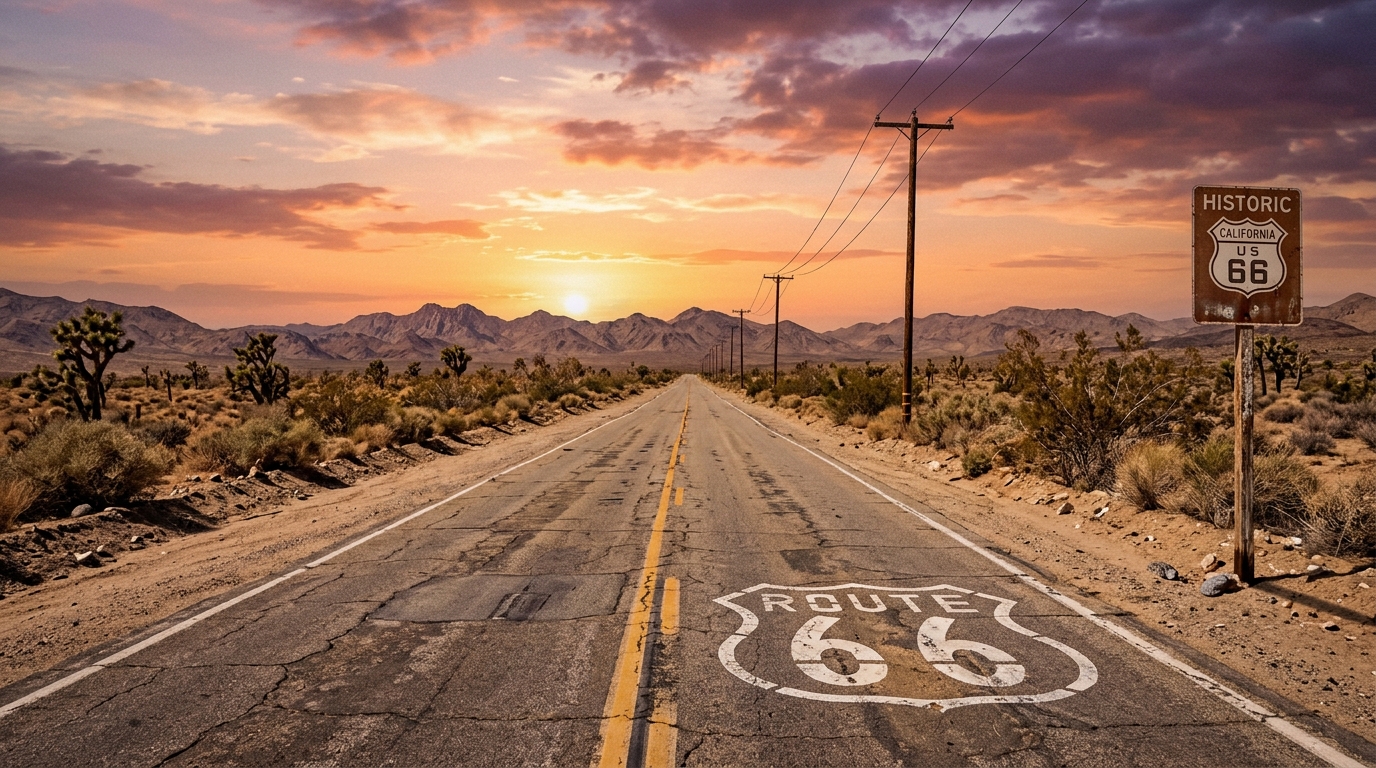
A California Route 66 road trip feels especially timely in 2026. There is no better excuse to explore a historic California highway than its hundredth birthday. Route 66 turns 100 in 2026, and the anniversary invites travelers to look beyond the interstate. The California portion delivers desert landscapes, restored roadside architecture, railroad history, neighborhood main streets, and a memorable finish at the Pacific Ocean. This is a trip about noticing what a faster route might make you miss.
The trick is to plan the drive around experiences rather than mileage. Some pieces of the old alignment still welcome motorists, while others have changed, closed, or been replaced. You can enjoy the spirit of the Mother Road without pretending it is a continuous modern freeway. Start in the desert near Needles, travel west through the Inland Empire and Pasadena, then finish in Santa Monica.
Whether you have one long weekend or several relaxed days, use this guide to decide where to stop, what to photograph, and when to leave extra room in the itinerary. For another California drive with a very different mood, save our Big Sur Highway 1 road trip guide.
Why the Route 66 Centennial Matters in California
Route 66 was established in 1926 as a highway connecting Chicago and the Los Angeles area. The route eventually became a symbol of affordable road travel and the American roadside. Although the federal highway designation was removed decades ago, communities still preserve signs, motels, museums, and stretches of pavement. The 2026 centennial makes those stories especially visible.
Visit California has highlighted anniversary activities and historic stops throughout the state. Its official Route 66 centennial guide is worth checking before a trip, because special exhibits and community celebrations can change. Think of the anniversary as a starting point for curiosity, not a reason to rush through every attraction.
Begin with the Mojave Desert’s Wide-Open Landscapes
A useful westbound rhythm is to devote the first day to Needles and Amboy, then move toward Barstow when you are ready for a comfortable overnight stop. The next day can focus on San Bernardino and Pasadena, leaving Santa Monica for a final afternoon. The order is a framework, not a timetable. Distances alone do not reveal how much time you’ll spend finding historic locations, reading exhibits, or sitting down to eat.
Needles is a practical eastern gateway for a westbound California itinerary. The Colorado River, railroad heritage, and historic streets offer a different introduction from the neon imagery usually associated with Route 66. Pick up water, fuel, and food before exploring the more remote road segments. Desert distances can look deceptively short on a map.
As you continue west, you may encounter portions of National Trails Highway and historic roadside places around Amboy. Navigation apps often favor faster interstate routes, so compare your planned historical alignment with current road information. Never follow a nostalgic sign onto a closed or poorly maintained road. An enjoyable Route 66 journey includes the freedom to turn back.
Photograph Roy’s in Amboy Without Rushing
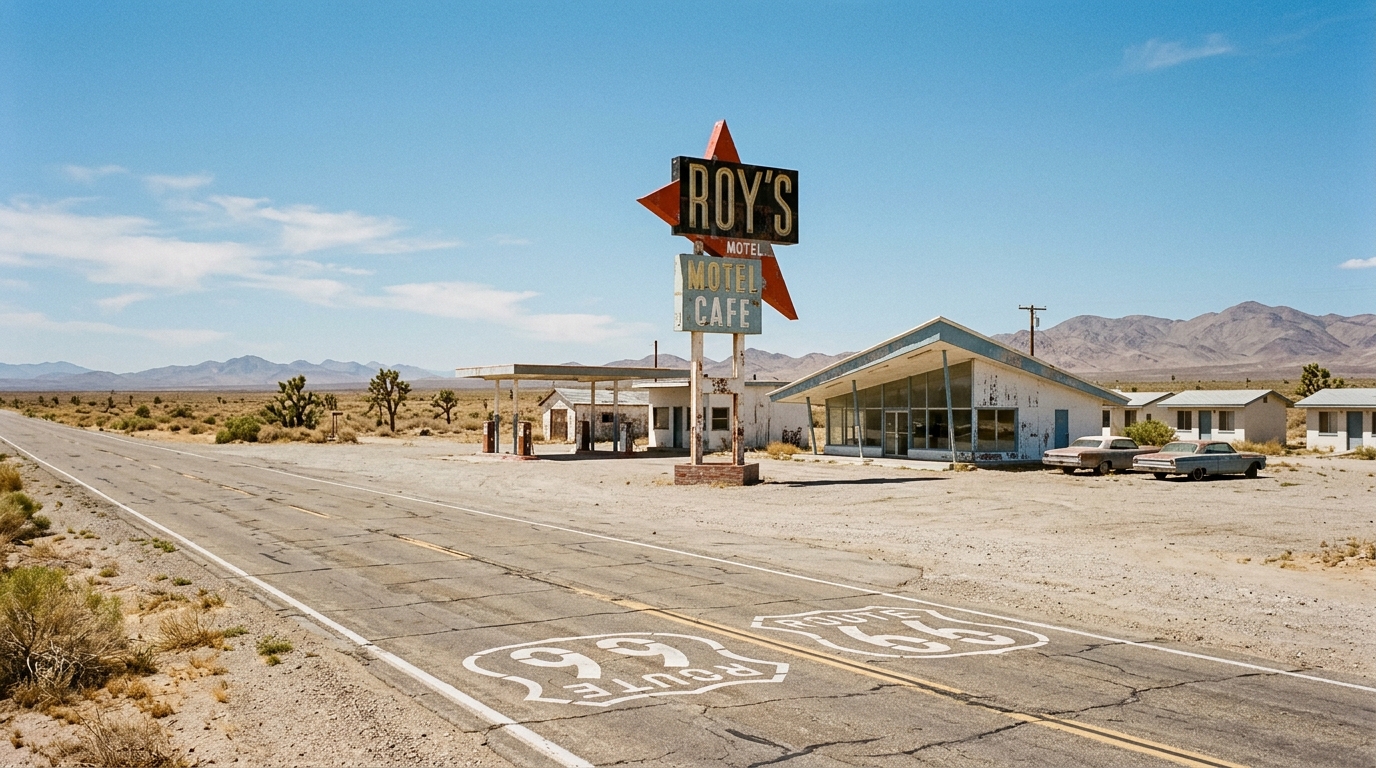
Roy’s Motel and Café is among the most recognizable photographic stops along California Route 66. Its towering sign and low-slung architecture create an unmistakable desert scene. Stop in designated areas, respect the property, and confirm current business services before relying on them. The motel should not be assumed available for overnight stays.
Late-afternoon light can give the surrounding mountains a warmer appearance, but daylight is better for evaluating access and road conditions. If you arrive early, enjoy the quiet setting rather than trying to recreate somebody else’s photo exactly. A wide view that includes the landscape explains why this stop matters.
Leave Room for History in Barstow
Barstow is more than a convenient food or fuel stop. Its railroad connections and roadside museums help explain how the desert became a transportation corridor. Look for local exhibits and historic downtown buildings, then take a real break before continuing. A good road trip does not require constant driving to count as an adventure.
For a flexible two-day route, consider an overnight stay around Barstow or another established town. You can avoid pushing an unfamiliar desert drive into darkness. Check museum opening hours and plan a second-choice activity in case a small attraction closes unexpectedly.
Find Classic Route 66 Atmosphere in the Inland Empire
The San Bernardino area connects Route 66’s desert history with the urban story of Southern California. Historic roads, neighborhood businesses, and surviving signs show how the route evolved as communities expanded. Here the road trip becomes less about empty horizons and more about everyday places built around the automobile.
Choose two or three meaningful stops instead of collecting every marker. A local café, an older business district, or an interpretive exhibit offers a better memory than a frantic series of parking-lot pictures. Be considerate when taking photos near residences and operating businesses. Route 66 is a living corridor, not an abandoned movie set.
How to Plan a Comfortable Centennial Road Trip
Before booking accommodation, decide whether you are collecting history, exploring architecture, or simply enjoying the journey. Those priorities shape the best stops. A museum-focused traveler might want to arrive during opening hours, while a photographer may value sunset light. If your group includes young children or older travelers, schedule more frequent breaks. Comfortable pacing is part of the trip’s appeal, and the anniversary deserves time to be appreciated.
Build your itinerary around the amount of daylight you have, the weather forecast, and the pace of your group. A simple route might cover the desert on one day, San Bernardino and Pasadena on another, and Santa Monica on the last. Travelers starting in Los Angeles can reverse the sequence. Either way, give yourself time for meals, walks, and unexpected discoveries.
Before leaving, check the Caltrans QuickMap for traffic and closures. It is especially important to verify any remote detour. If your travel dates fall near winter storms, our California winter driving guide explains how to plan around changing road conditions.
Finish in Pasadena and Santa Monica
Pasadena’s Colorado Boulevard provides a city-scale chapter of the Route 66 story. Older storefronts, architecture, and walkable blocks make it easy to enjoy the route without spending every minute inside the car. Find public parking and explore on foot. A neighborhood café or bookstore can be as memorable as a formal landmark.
Continue west toward Santa Monica, widely celebrated as the symbolic endpoint of the famous highway. The pier area can be busy, especially on weekends. Allow for parking, pedestrian traffic, and a slower final approach. The Pacific Ocean makes a satisfying contrast to the dry desert landscapes where your California journey began.
Choose Stops That Match Your Travel Style
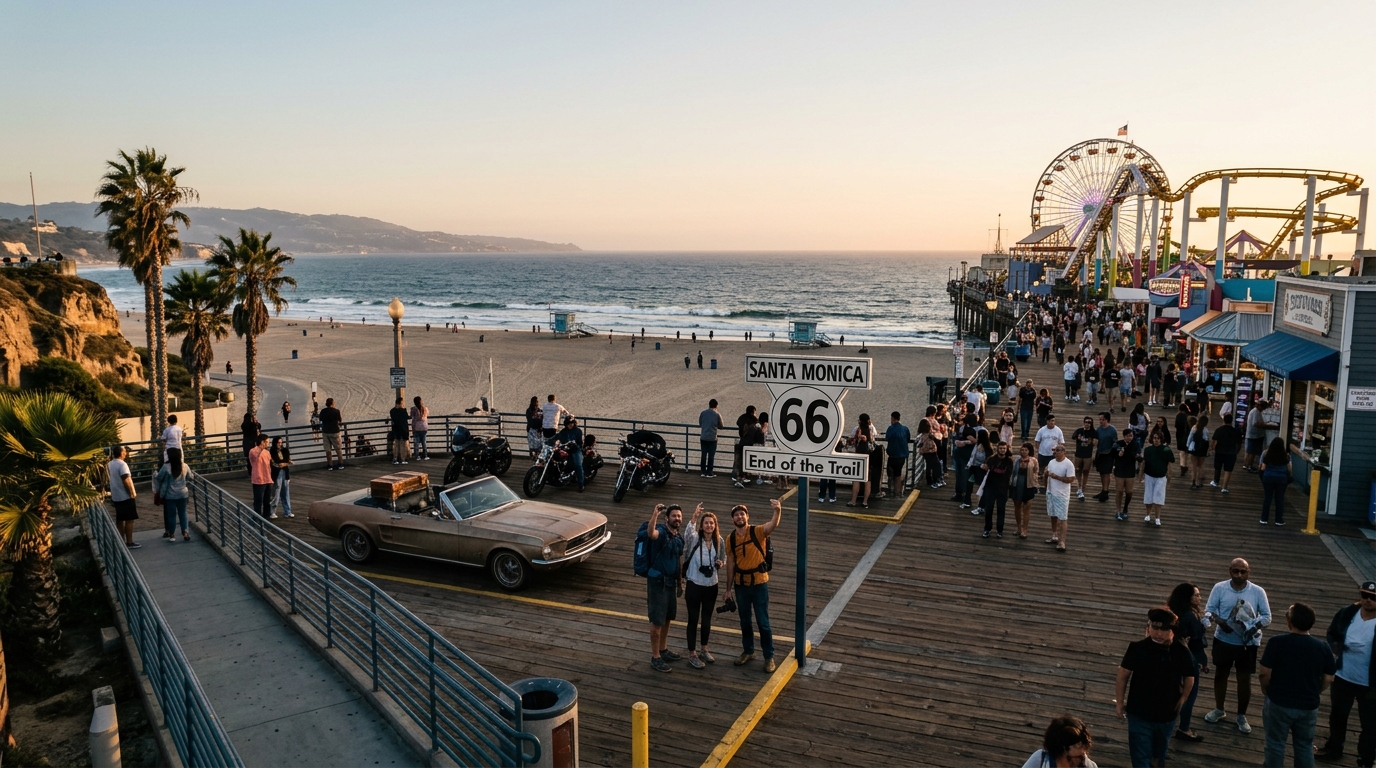
Architecture lovers may prioritize vintage signs and older downtown buildings. Families might prefer museums, frequent snack breaks, and short walks. Photographers may want an early start in Amboy and a late-afternoon arrival near the ocean. There is no single correct way to celebrate a route that represents a century of travel stories.
If time is limited, focus on one region instead of forcing a full cross-state drive. A Pasadena and Santa Monica day trip can still explore the centennial theme. A separate desert weekend can go deeper into Needles, Amboy, and Barstow. Smaller journeys often make more room for conversations with local people.
Keep the Desert Portion Safe and Flexible
Carry more water than you expect to drink, keep your fuel level comfortably high, and download maps before entering weak-signal areas. Tell someone your general route if you intend to explore remote stretches. Take breaks when you feel tired. A roadside photo is never worth stopping on a narrow shoulder or standing in moving traffic.
Warm days can still give way to cold desert evenings, so pack layers. Respect private property, posted restrictions, and fragile desert land. Historic roads are part of the landscape, and leaving them intact helps other travelers experience them. Use proper turnouts when you want to stop for a view.
Final thought: California Route 66 works best when you treat it as a collection of stories, not a checklist. The centennial is an invitation to support communities that have kept those stories alive. Start with a realistic route, check conditions, and leave space for a place that catches your attention along the way. For a different seasonal adventure, explore our Eastern Sierra fall colors itinerary.